The Sensory Algorithm: A Scientific Approach to Dialing In Home Espresso
Update on Dec. 30, 2025, 4:27 p.m.
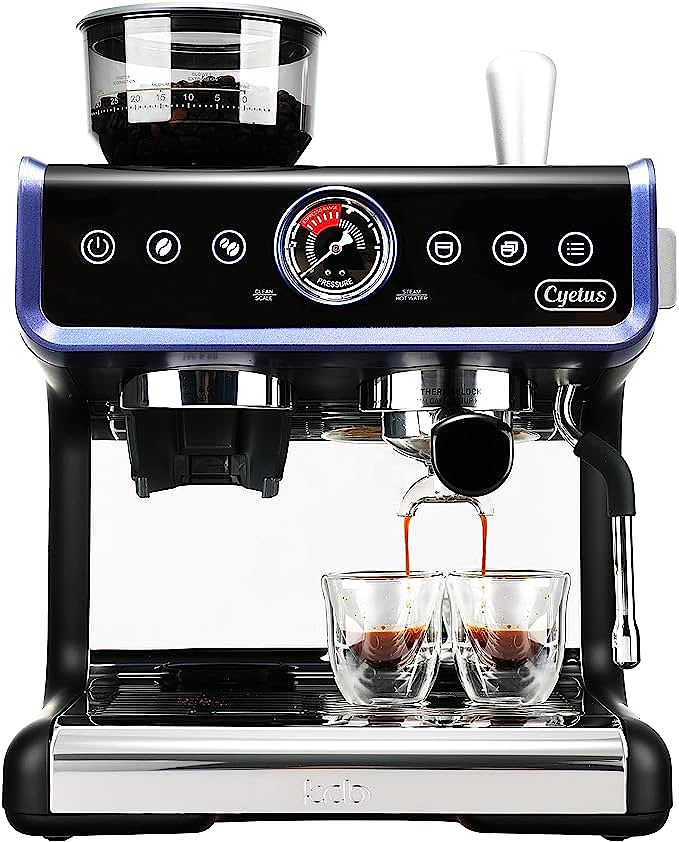
In our previous exploration of espresso engineering, we dismantled the machine to understand its thermal and hydraulic heart. We learned how devices like the CYETUS CYK7601 utilize PID controllers and 15-bar pumps to create the potential for excellence. But potential is not performance. A Stradivarius violin does not play itself, and a precision espresso machine does not automatically dispense “god shots.”
The missing variable is the operator—the Mano (hand) in the traditional Italian “Four M’s” of espresso. Making exceptional coffee is an exercise in the scientific method: hypothesis, experimentation, observation, and adjustment. This process is known as “dialing in.” It is not about luck; it is about following a sensory algorithm to align the variables of grind, dose, time, and temperature.
This guide moves beyond the hardware specs to focus on the wetware—your technique. We will explore the physics of puck preparation, the fluid dynamics of milk texturing, and the chemistry of taste balance, turning the daily ritual into a disciplined craft.
The Dialing-In Protocol: Navigating the Variable Matrix
When you unbox a new bag of beans, the first shot is rarely perfect. It is a baseline data point. To navigate from that baseline to a balanced extraction, we must understand the relationship between our variables.
The primary control variable on integrated machines like the CYETUS is the Grind Size. The specifications note 30 settings, but how do you choose? You let the flow rate dictate the choice.
1. The Time-Flow Constant
Espresso is defined by a specific flow rate: typically a 1:2 ratio (e.g., 18g ground coffee in, 36g liquid espresso out) in 25 to 30 seconds.
* The Gusher (Under-extraction): If your shot pulls 36g in 15 seconds, the water moved too fast. The water did not have enough contact time to dissolve the complex sugars and oils. The result is sour, salty, and thin.
* Physics: The flow resistance was too low. The particle surface area was too small.
* Correction: Grind Finer. This increases surface area and packs the particles tighter, slowing the water.
* The Choker (Over-extraction): If your machine hums and struggles, dripping out only 10g in 40 seconds, the water is trapped. It is dissolving the slow-release tannins and dry distillates (ashy, woody notes).
* Physics: The hydraulic resistance exceeded the pump’s capability to maintain flow.
* Correction: Grind Coarser.
2. The Taste Balance (The S-Curve)
Once you are within the 25-30 second window, you stop watching the clock and start using your palate. Extraction follows a bell curve.
* Early Phase: Acids (Sourness) extract first.
* Middle Phase: Sugars and Aromatics (Sweetness/Flavor) extract next.
* Late Phase: Bitterness and Astringency extract last.
“Dialing in” is simply the act of cutting off the flow exactly when the sweetness maximizes and before the bitterness takes over. If a shot runs in 28 seconds but tastes bitter, don’t change the grind. Instead, stop the next shot at 24 seconds (shorter ratio). You are manipulating the chemical solvent capability of the water.
The Physics of Puck Preparation: Distribution and Tamping
Between the grinder and the pump lies the most critical human intervention: Puck Prep. The goal is to create a coffee bed of uniform density.
Water is lazy; it always seeks the path of least resistance. If you simply dump grounds into the 58mm portafilter and tamp, the center might be dense while the edges are loose. The pressurized water will tunnel through the loose edges, a phenomenon called Channeling. This results in a shot that is simultaneously sour (from the dense, dry center) and bitter (from the over-extracted channels).
To combat this, modern baristas use specific tools and techniques:
1. WDT (Weiss Distribution Technique): Using fine needles to stir the grounds in the basket. This breaks up clumps created by the grinder’s static electricity and fluffs the coffee to a uniform density.
2. Leveling: Ensuring the bed is perfectly flat before tamping.
3. Tamping: Applying pressure to compress the air out of the puck. While people obsess over “30 pounds of pressure,” the amount of pressure matters less than the consistency and levelness. Once the air is removed, the coffee creates a solid cake. You cannot over-tamp, but you can definitely tamp crookedly. A crooked tamp creates a thin side of the puck where water will rush through.
The 58mm commercial size of the CYETUS portafilter is an advantage here. Its wider diameter creates a thinner puck compared to smaller domestic baskets, which naturally promotes more even saturation and makes it easier to achieve uniform density.
Fluid Dynamics: The Microfoam Vortex
For many, the espresso is just a substrate for milk. Creating “latte art quality” milk is not about heating; it is about hydrodynamics and protein chemistry.
The steam wand on a machine serves two distinct physical functions:
1. Aeration (Stretching): When the wand tip is just breaching the surface, the high-velocity steam entrains air into the milk. This creates bubbles.
2. Emulsification (Texturing): This is the hard part. You must submerge the tip slightly to create a Vortex. The rotational energy of the steam jet whips the large bubbles into microscopic ones—so small they are invisible to the naked eye. This is Microfoam.
The Chemistry of Heat: Milk contains whey and casein proteins. When cold, they are coiled up. As you introduce heat (steam), these proteins “denature” or unwind. They then form a protective film around the air bubbles, stabilizing the foam. However, if you overheat the milk (past 70°C/160°F), the proteins coagulate completely, the foam structure collapses, and the sugars (lactose) lose their perceived sweetness.
Thermal Management for Single Boilers:
Machines like the CYETUS often use a single boiler for both brewing and steaming. This introduces a thermodynamic constraint. The boiler has a limited volume. If you steam for too long, the pressure drops as the boiler runs out of steam energy.
* The Strategy: Purge the wand before starting to remove condensation. Steam efficiently. If you are making multiple drinks, you may need to let the boiler recover pressure between pitchers. This isn’t a defect; it’s the physics of thermal capacity in a compact chassis. Understanding this helps you pace your workflow.
Diagnostics: Reading the Puck and the Gauge
Finally, a data-driven home barista uses post-extraction evidence to refine their technique. * The Pressure Gauge: If the gauge flutters wildly during extraction, it indicates channeling—the puck is breaking apart. If it stays too low, your grind is too coarse or your coffee is stale (lack of CO2). * The Spent Puck: While “puckology” is an inexact science, a sloppy, wet puck often indicates too much headspace (dose too low), while a puck with pinholes on the surface confirms channeling. * The Taste: This is the ultimate sensor. Astringency (a dry, sandpaper sensation on the tongue) is the hallmark of channeling. It means high-pressure water stripped tannins from a specific part of the puck.
Conclusion: The Craft of Consistency
The transition from owning an espresso machine to being a home barista happens when you stop blaming the equipment and start managing the variables. It is a shift from passive consumption to active engagement.
Whether you are working with a commercial cafe setup or an integrated all-in-one like the CYETUS CYK7601, the laws of physics do not change. The water still needs to flow at the right rate; the milk proteins still need to be stretched at the right temperature. By applying a rigorous methodology—dialing in by taste, prepping the puck for uniformity, and managing the thermodynamics of your machine—you unlock the true potential of the bean. The perfect cup is not a product of the machine; it is a product of the mind and hand that operates it.